ProductsProduct Portfolio
Frameless servo motor categories for industrial OEM sourcing, from compact joint-actuation kits to high-torque direct-drive motor platforms.
Use this page as a pre-RFQ navigator: pick the product family, capture the correct engineering inputs, and move directly to sample validation criteria that buyers can approve.
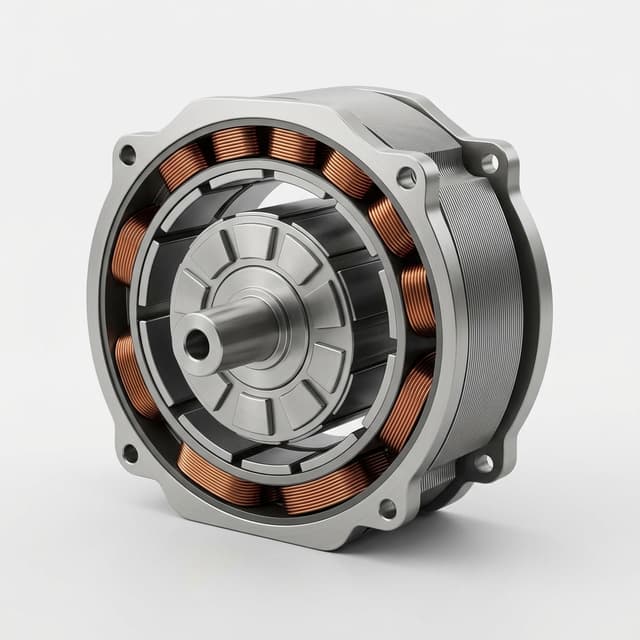
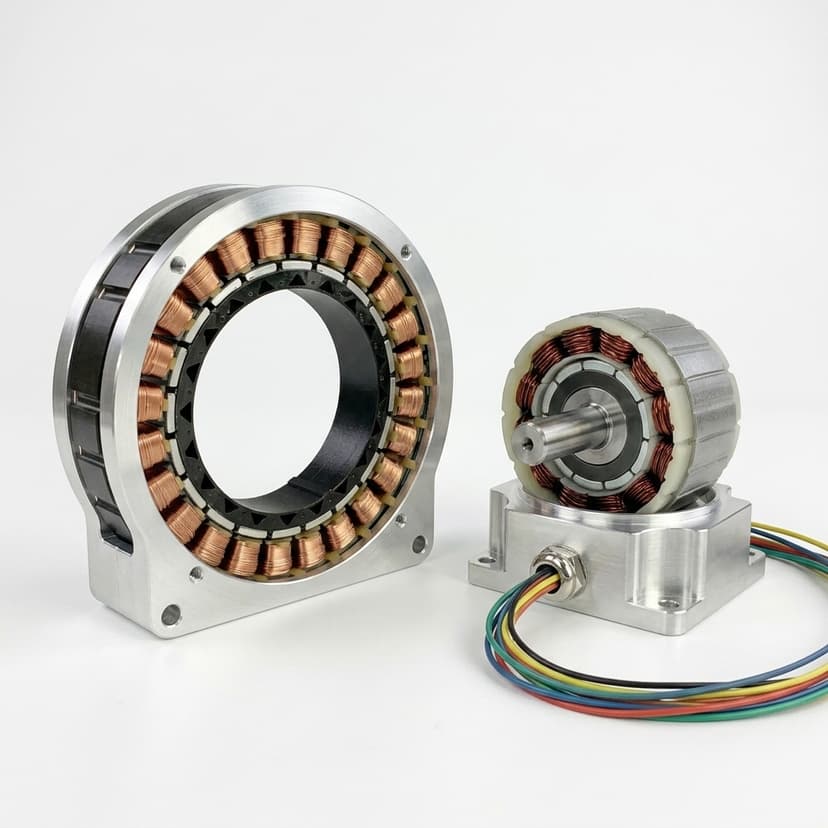
Frameless Servo Motor Kits
Stator and rotor kit platform for compact direct-drive systems with flexible OEM integration.
Best for engineering teams selecting a scalable frameless-servo baseline.
- Wide OD/ID architecture options for compact joints
- Configurable winding constants for voltage and speed targets
- Balanced torque density and thermal transfer readiness
View detailsTorque Motor Series
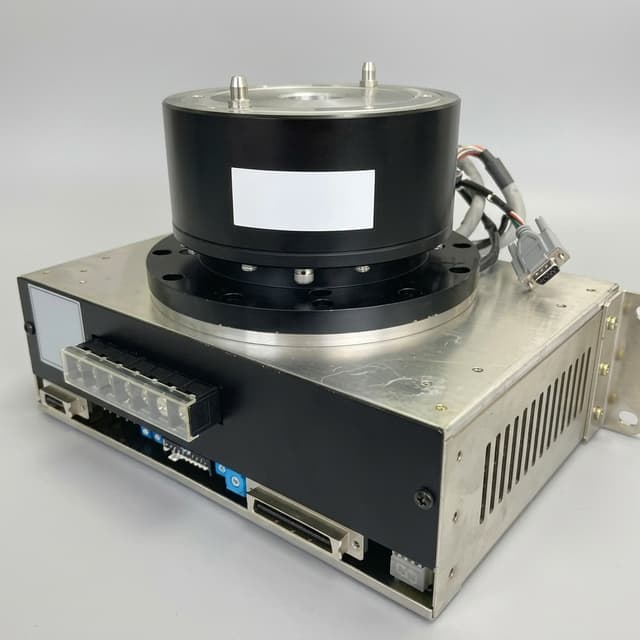
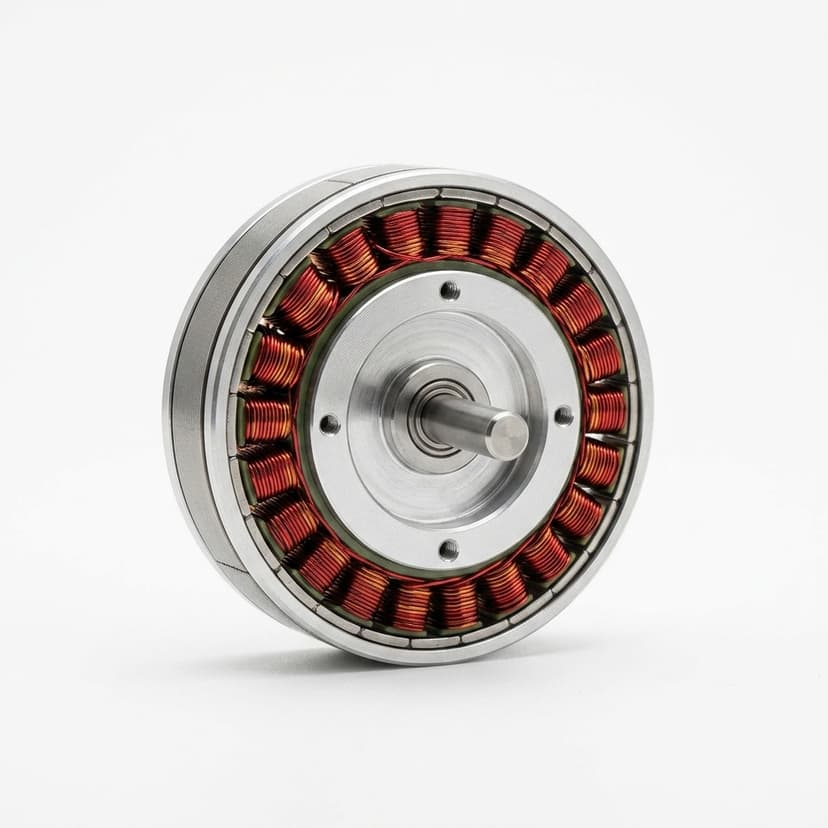
High-torque-density frameless motor platform for low-speed precision and direct-drive control.
For teams prioritizing low-speed smoothness, torque density, and positioning stability.
- High pole-count designs for smooth low-speed motion
- Optimized copper fill and magnetic circuit layout
- Configurable stack options for torque scaling
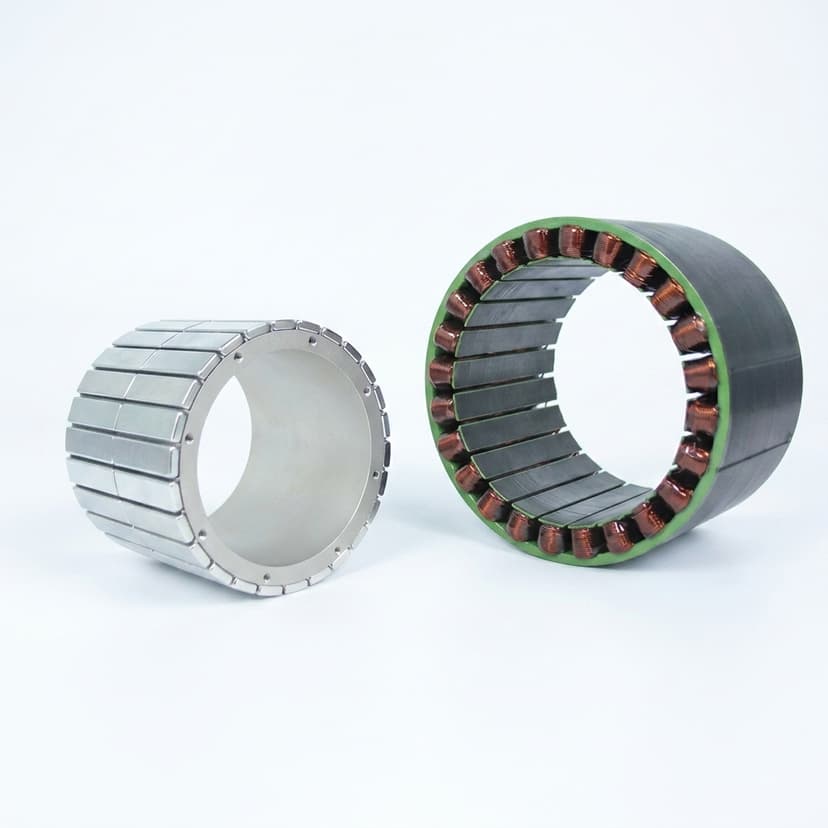
View detailsHollow Shaft Frameless Servo
Large-aperture frameless-servo configurations designed for cable routing, optics channels, and compact integration.
For system architects requiring cable-through or optical-through direct-drive structures.
- High ID/OD ratio for pass-through integration
- Compact axial profile for constrained assemblies
- OEM-ready mechanical/electrical adaptation support
View detailsHow to Compare Families Without Relying on Claims
First-round selection should connect architecture, thermal boundary, mounting method, and available evidence. If two families look similar by rated torque, prioritize the one that can be validated with CAD, torque-speed curves, and sample acceptance criteria that match your project.
Frameless Servo Motor Kits
- Mechanical fit comes before torque claims: For a frameless kit, stator OD, rotor ID, stack height, retention method, and cable exit direction decide whether the motor can enter the design at all. Treat the CAD review as the first gate, then compare torque-speed data.
- Continuous torque must be tied to the housing heat path: The same winding can behave differently in an aluminum joint housing, a thin stainless frame, or a sealed polymer module. Ask for assumptions behind continuous torque: ambient temperature, mounting surface, duty cycle, and thermal sensor strategy.
Torque Motor Series
- Low-speed smoothness is a quality requirement, not a brochure adjective: For torque motors used in tables, stages, or precision axes, buyers should define acceptable ripple, cogging feel, and velocity stability before comparing peak torque. Otherwise a strong motor can still fail the motion-quality target.
- Peak torque duration must be explicit: Peak torque is useful for acceleration and disturbance recovery only when the allowed duration, current limit, winding temperature, and recovery time are known. Procurement should not compare peak values without those assumptions.
Hollow Shaft Frameless Servo
- Aperture is a system constraint, not only a motor dimension: The required center opening must include cable bundle, connector bend radius, optical path, shaft, bearing, encoder, and assembly clearance. A motor ID that looks sufficient can still fail after routing is modeled.
- Rotor inertia affects control response: Large aperture designs can increase rotor inertia. Buyers should compare inertia against payload inertia and controller bandwidth before assuming a hollow-shaft option will settle quickly.